
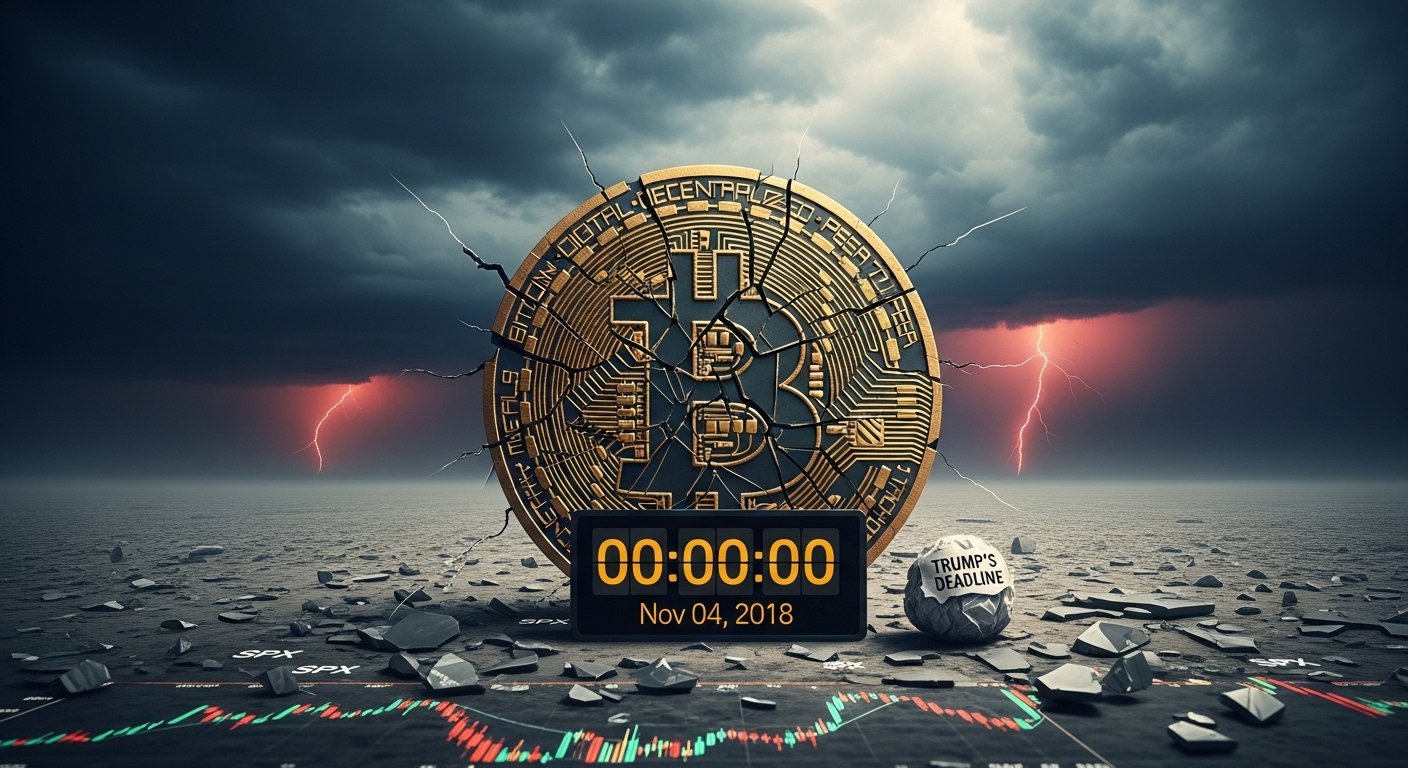
Rising Tension Around Iran Deadline
The geopolitical tension surrounding Iran has once again entered a critical phase as Donald Trump’s so-called “doomsday deadline” approaches. Markets are watching closely because any escalation in rhetoric or action could quickly shift global risk sentiment. Investors are already nervous, as uncertainty around international conflict tends to create volatility across both traditional and digital assets.
At the core of the concern is whether this deadline leads to real action or remains political pressure. Even the possibility of confrontation has been enough to push traders into a defensive mindset. When geopolitical stress rises, liquidity often tightens, and speculative assets like cryptocurrencies tend to react faster than broader markets.
Market Reaction: Bitcoin and SPX on Edge
Bitcoin and the S&P 500 are both sitting in a sensitive position where sentiment can change rapidly. Bitcoin, being a high-risk asset, usually reacts first when fear enters the market. If tensions escalate, traders may move to cash or stable positions, triggering a sharp drop in price momentum.
The SPX, on the other hand, reflects institutional sentiment more broadly. Any sign of conflict or instability can push equities lower as investors seek safety in bonds or defensive sectors. The key question is whether markets have already priced in the risk or if a sudden shock could still trigger a fresh wave of selling.
What Could Happen Next: Blink or Breakdown
One possible outcome is that the political pressure eases without direct escalation, which could lead to a relief rally across both crypto and equities. In that case, Bitcoin may recover quickly as risk appetite returns, and the SPX could regain lost ground. Markets often rebound sharply when worst-case scenarios are avoided.
However, if the situation escalates instead of de-escalating, the reaction could be fast and aggressive. Traders would likely reduce exposure, leading to sharp downside moves. Bitcoin could face liquidation-driven drops, while equities might see a broader risk-off environment that spreads across global indices.
Investor Sentiment and Broader Impact
Beyond short-term price action, investor sentiment plays a major role in shaping market direction. Fear-driven environments tend to reduce trading volume and increase volatility, especially in crypto markets where leverage is high. This creates a feedback loop where small moves become amplified.
In the broader picture, geopolitical uncertainty like this often reinforces Bitcoin’s dual narrative: as both a risk asset and a potential hedge. Some investors may exit positions, while others may accumulate during dips, expecting long-term recovery once stability returns.
FAQs
What is the “doomsday deadline” in this context?
It refers to a politically charged deadline that markets interpret as a potential trigger for heightened geopolitical tension involving Iran.
Why does Bitcoin react to geopolitical events?
Bitcoin is considered a high-risk asset, so traders often move in and out quickly during uncertainty, causing sharp price swings.
How does the SPX usually respond to global conflict risk?
The S&P 500 typically declines during rising geopolitical tension as investors move toward safer assets.
Is a market crash guaranteed in this situation?
No, markets only react based on outcomes. If tensions ease, prices may stabilize or even recover quickly.