
Market Overview: A Sudden Shift in Sentiment
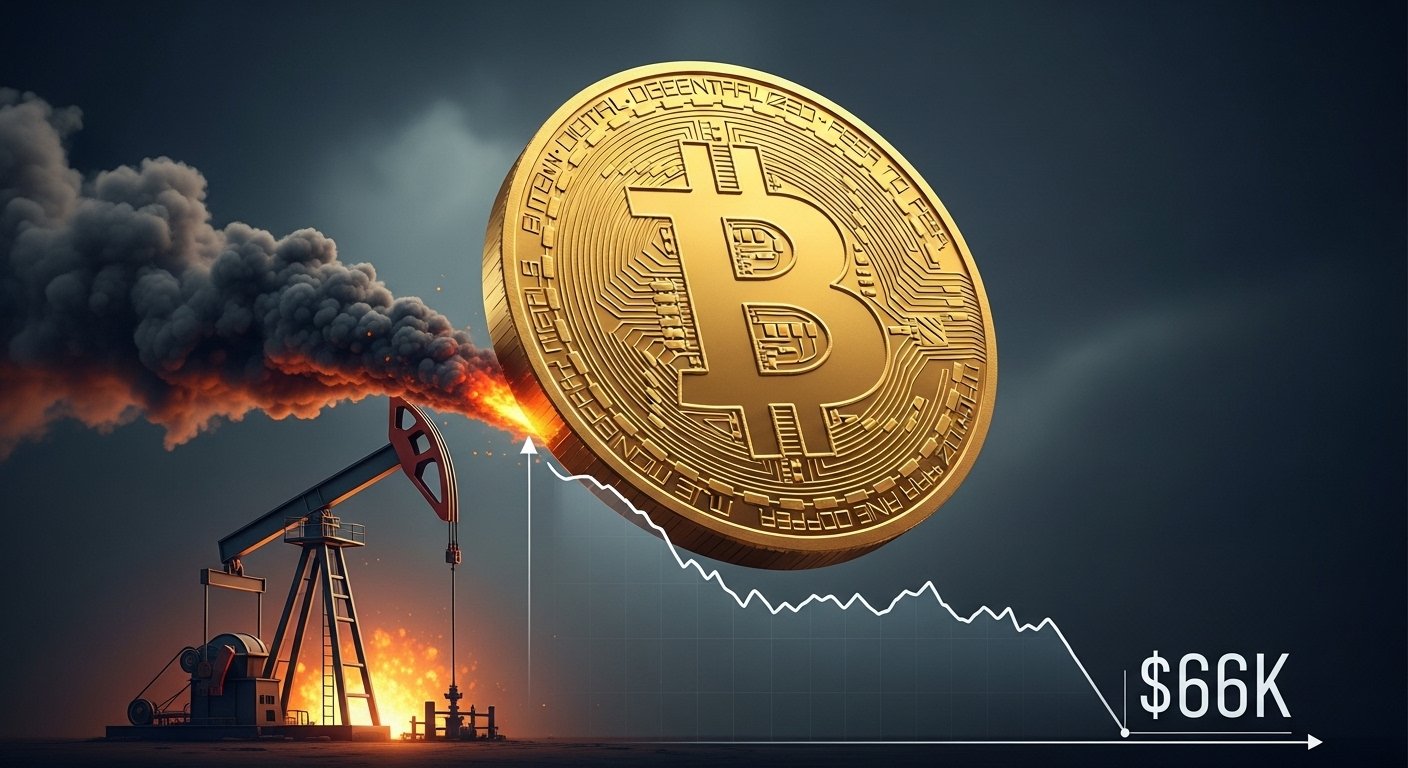
Bitcoin’s recent drop toward the $66,000 level has caught traders off guard, especially after weeks of relatively stable movement. The sudden downturn reflects a broader shift in global market sentiment, where risk assets are starting to feel pressure again. While crypto often moves on its own narrative, this time the decline is closely tied to macroeconomic changes that are spilling over into digital markets.
Investors are increasingly cautious as uncertainty builds across global financial systems. When traditional markets face stress, crypto tends to react in exaggerated ways, and this time is no different. The combination of tighter liquidity expectations and rising energy prices has created a more defensive trading environment, pushing traders to reduce exposure to volatile assets like Bitcoin.
Oil Breakout and Macro Pressure on Risk Assets
One of the key triggers behind the current market pressure is the sharp breakout in oil prices. As crude oil climbs, inflation concerns tend to rise with it, especially in economies already struggling with higher costs. This creates a ripple effect across financial markets, as higher energy prices often reduce consumer spending power and increase operational costs for businesses.
For risk assets like Bitcoin, this environment is typically unfavorable. Rising oil prices can strengthen inflation fears, which in turn may delay expectations of interest rate cuts. When central banks remain cautious or hawkish, liquidity in the market tightens, and speculative assets usually face the hardest correction. This is exactly the environment Bitcoin is currently reacting to.
What This Means for Bitcoin Going Forward
Despite the current decline, Bitcoin’s long-term structure is still being closely watched by investors. Many traders view corrections like this as part of a broader cycle rather than a trend reversal. However, short-term volatility is expected to remain high as macroeconomic uncertainty continues to influence sentiment.
If oil prices continue to rise, Bitcoin may stay under pressure in the near term as markets adjust to the new inflation narrative. On the other hand, any stabilization in energy markets or a shift toward dovish monetary policy could quickly restore confidence. For now, Bitcoin remains tightly linked to global macro trends rather than moving purely on crypto-specific developments.
FAQs
Why did Bitcoin drop to $66K?
Bitcoin fell mainly due to rising macroeconomic pressure, especially the surge in oil prices and increased inflation concerns.
How does oil price affect Bitcoin?
Higher oil prices can increase inflation expectations, leading to tighter monetary policy, which often negatively impacts risk assets like Bitcoin.
Is this the end of Bitcoin’s bull trend?
Not necessarily. Many analysts view this as a short-term correction driven by macro conditions rather than a long-term reversal.
Can Bitcoin recover soon?
Yes, recovery is possible if inflation pressures ease or global liquidity conditions improve in the coming months.