
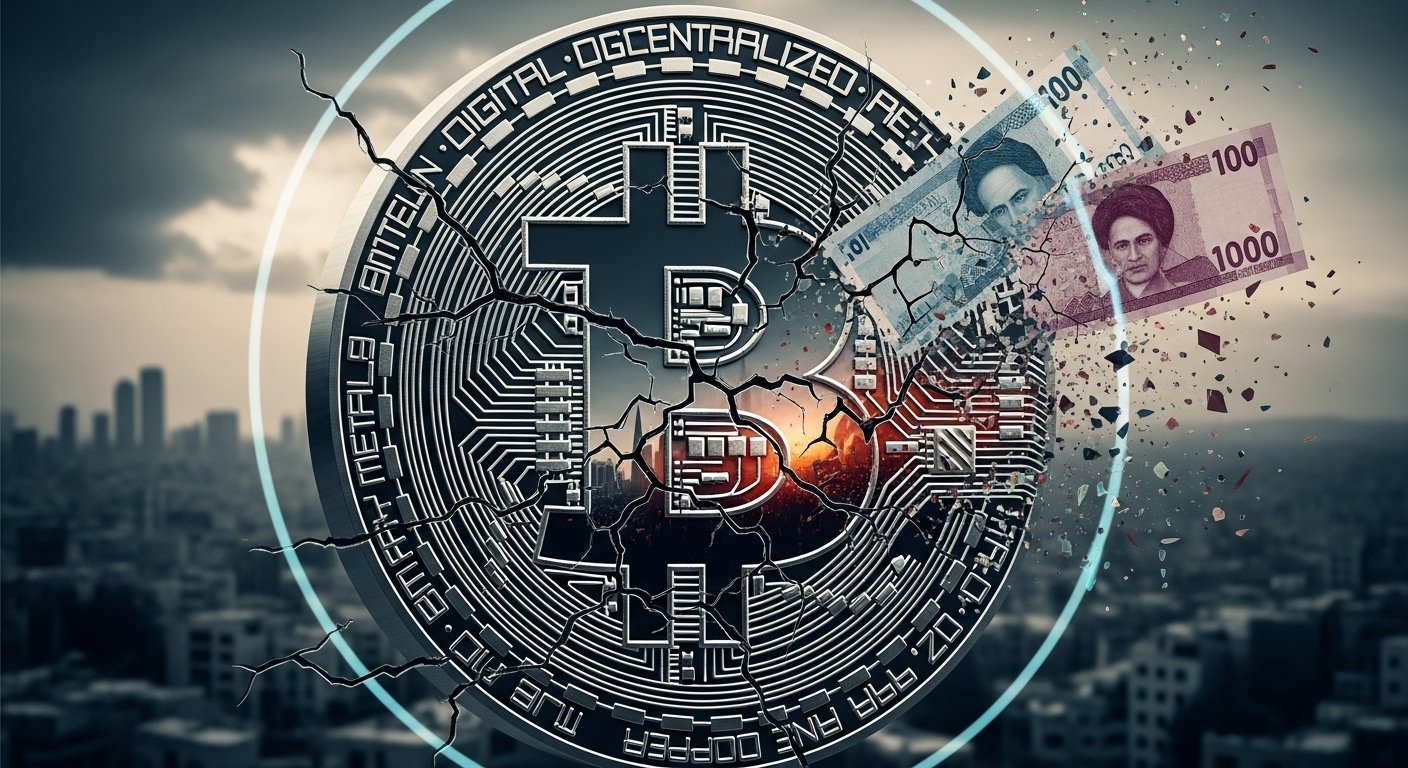
Economic Pressure in Iran Deepens
Iran’s economy is facing severe strain as ongoing protests and long-term financial instability continue to weaken public confidence. The national currency, the rial, has dropped to record lows, making everyday goods more expensive and reducing purchasing power for ordinary citizens. Inflation and limited access to global financial systems have added further pressure on households already struggling with rising living costs.
At the same time, uncertainty in the political and economic environment has made long-term financial planning difficult for many people. Businesses are also feeling the impact, as fluctuating exchange rates and restricted international trade limit growth opportunities. This combination of economic stress and social unrest has created a climate where financial decisions are increasingly driven by survival rather than investment strategy.
Rising Turn to Bitcoin and Digital Assets
As the value of the rial continues to fall, many Iranians have started turning toward Bitcoin and other digital assets as a way to protect their savings. Crypto is seen by some as a safer alternative to holding local currency, especially when traditional banking systems feel unstable or restricted. This shift reflects a growing awareness of decentralized financial tools among the population.
However, this move toward Bitcoin is not without challenges. Limited access to international exchanges, regulatory uncertainty, and the volatility of cryptocurrencies make it a risky option. Despite this, the demand for digital assets continues to grow as people look for ways to preserve value in an unpredictable economic environment.
Impact on Everyday Life and Market Confidence
The weakening currency has had a direct effect on daily life, with imported goods becoming significantly more expensive. Families are adjusting their spending habits, prioritizing essentials while cutting back on non-essential purchases. This shift has also affected small businesses, many of which rely on imported materials or products.
Market confidence remains fragile, as both consumers and investors hesitate to commit to long-term financial decisions. The combination of inflation, currency instability, and political uncertainty has created a cautious economic atmosphere where risk is avoided whenever possible.
Future Outlook for Iran’s Financial Stability
Looking ahead, the financial outlook remains uncertain as structural economic challenges persist. Without significant reforms or stabilization measures, pressure on the currency and financial system is likely to continue. This uncertainty may further push citizens toward alternative assets like Bitcoin.
At the same time, global crypto trends and regional developments could influence how digital assets are adopted within the country. While Bitcoin offers a temporary hedge for some, it is not a complete solution to deeper economic issues. The coming months will likely determine whether the situation stabilizes or continues to deteriorate.
FAQs
Why are Iranians turning to Bitcoin?
Many are using Bitcoin to protect their savings from the falling value of the rial and ongoing inflation.
Is the Iranian currency still stable?
No, the rial has recently hit record lows, reflecting ongoing economic instability.
Is Bitcoin widely accessible in Iran?
Access exists but is limited due to regulations and restrictions on global exchanges.
Does crypto solve Iran’s economic problems?
Not entirely. It may help individuals store value, but it does not fix structural economic issues.