
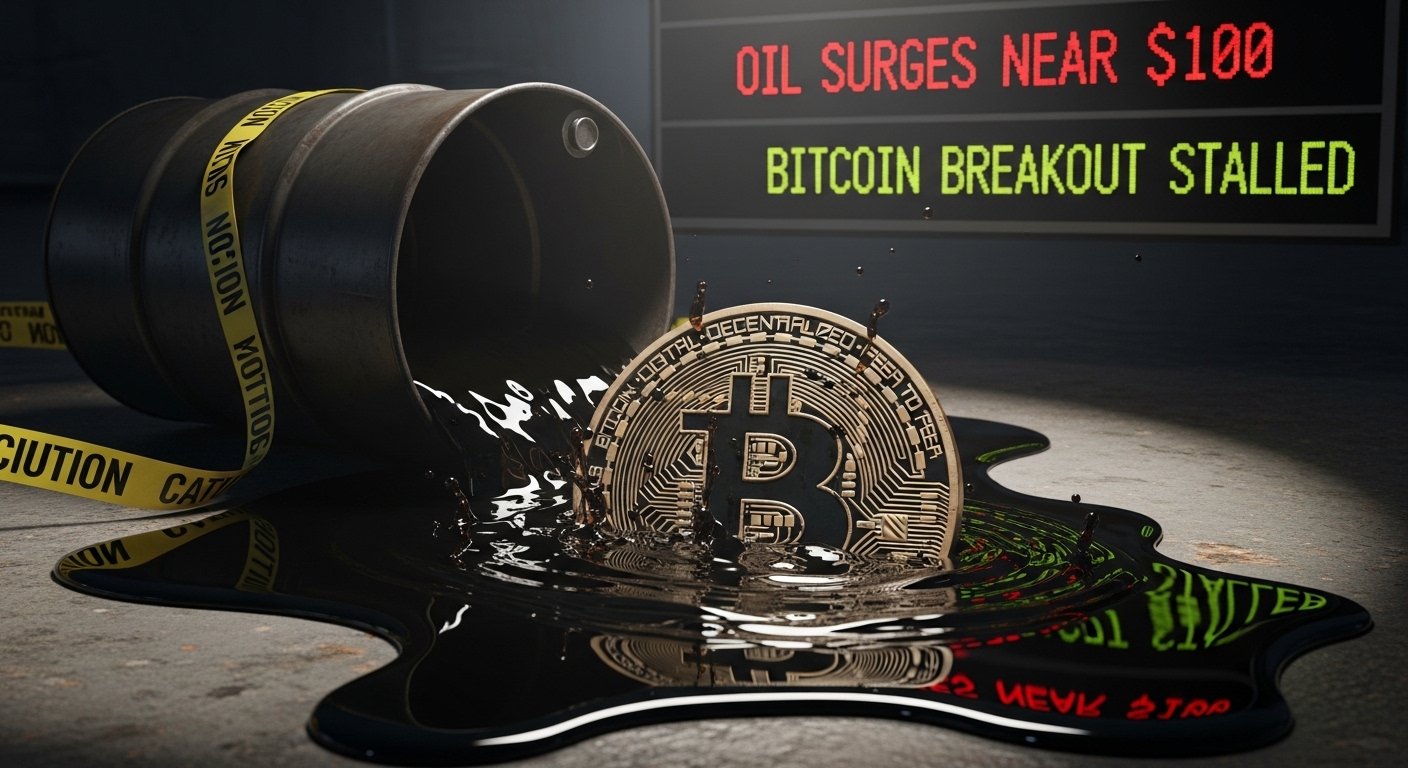
Oil Surges Toward the $100 Mark
Oil prices have been climbing steadily and are now moving close to the $100 per barrel level, driven by tighter global supply and ongoing geopolitical tensions. Production cuts from major oil-producing nations, along with stable or rising demand from key economies, have added strong upward pressure on prices. As colder seasons approach in some regions, energy demand has also increased, further fueling the rally.
This surge in oil is not just an energy market story—it has wider economic effects. Higher oil prices usually increase transportation and production costs, which can feed into inflation. When inflation expectations rise, investors often become more cautious, shifting away from riskier assets and adjusting their portfolios toward safer or inflation-hedged options.
Bitcoin Breakout Loses Momentum
Bitcoin recently attempted to break above a key resistance level, but the momentum quickly faded. The surge in oil prices has played a role in this hesitation, as rising energy costs often signal higher inflation, which reduces investor appetite for speculative assets like crypto. As a result, Bitcoin’s breakout attempt stalled before gaining strong follow-through.
At the same time, the broader financial environment is becoming less supportive. A stronger US dollar and rising bond yields have added pressure on crypto markets. Liquidity conditions are also tightening, making investors more selective. This combination has led to short-term selling pressure and reduced enthusiasm in the digital asset space.
What Investors Are Watching Next
The connection between oil and Bitcoin may not be direct, but both are influenced by the same macroeconomic forces. Rising oil prices can push inflation higher, which often leads central banks to maintain tighter monetary policies for longer. This environment typically limits liquidity, which is a key driver for crypto rallies.
Looking ahead, investors are closely watching whether oil stabilizes near current levels or continues to climb above $100. If inflation pressures remain elevated, risk assets like Bitcoin may continue to struggle. However, if oil prices stabilize and inflation expectations cool down, Bitcoin could regain momentum and attempt another breakout.
FAQs
Why does oil price affect Bitcoin?
Because both are influenced by inflation and global liquidity conditions, which impact investor risk appetite.
Can Bitcoin still rise during an oil price surge?
Yes, but it becomes more difficult if rising oil pushes inflation higher and tightens financial conditions.
Is this Bitcoin correction temporary?
It can be temporary if macro conditions stabilize and selling pressure eases in the broader market.
What should investors watch now?
Key factors include oil price trends, inflation data, US dollar strength, and central bank policy signals.